
Characterizing Tumor Heterogeneity and Tumor Microenvironment by Single-cell Multiomics
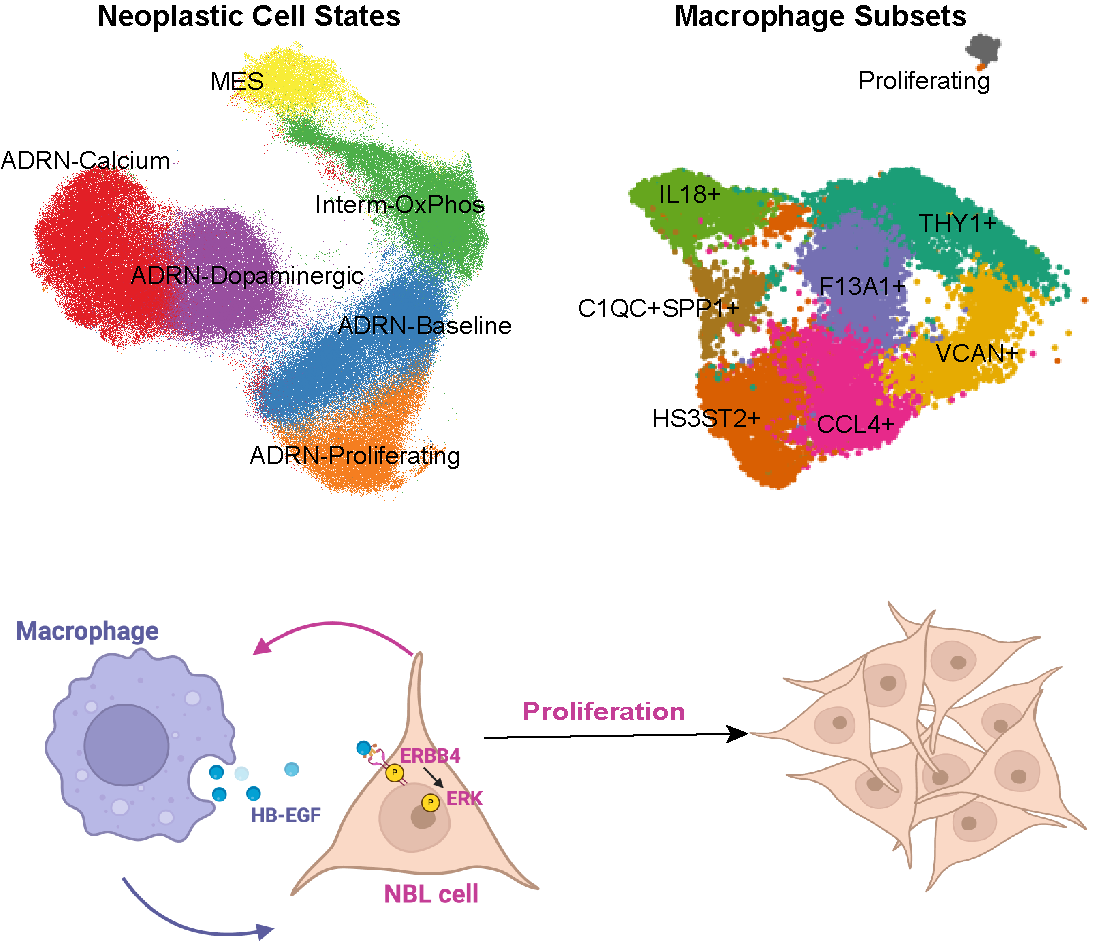
Single-cell sequencing technologies have revolutionized our understanding of cancer. Using these approaches, we have characterized the single-cell transcriptome and chromatin accessibility of three high-risk pediatric cancers: KMT2A-rearranged leukemia (Blood, 2022), neuroblastoma (Nature Genetics, 2025), and glioblastoma (Cell Reports Medicine, 2026), revealing key mechanisms underlying treatment resistance. For example, in a recent study published in Nature Genetics, we constructed a longitudinal single-cell and spatial atlas of high-risk neuroblastoma. We identified multiple neoplastic and macrophage cell states, along with significant rewiring of the tumor microenvironment (TME), specifically driving macrophages toward pro-tumorigenic phenotypes via the HB-EGF/ERBB4 signaling axis.
Transcriptional Regulation of Malignant Cell States
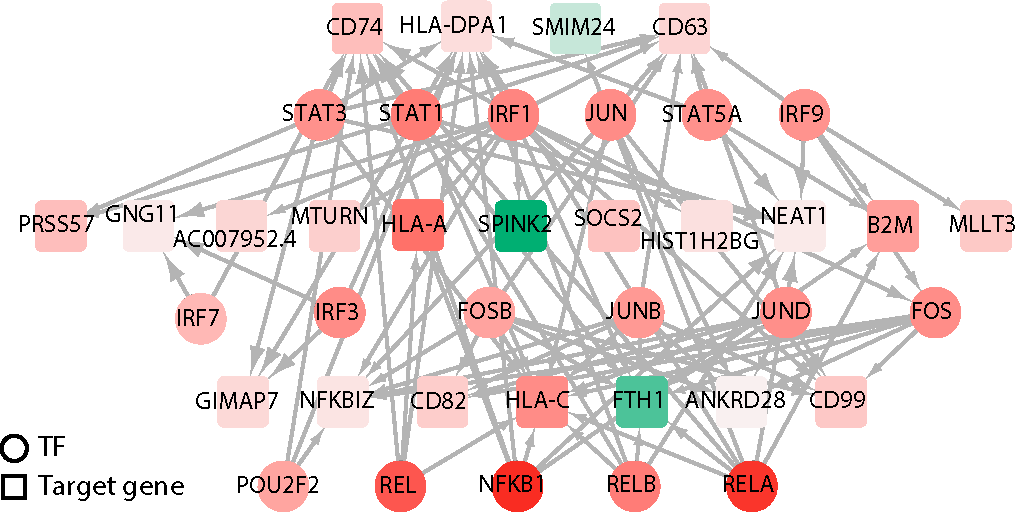
Recent single-cell profiling reveals that diverse cancer cell states co-exist, driving treatment resistance and relapse. To define how these states are transcriptionally regulated, we developed a computational pipeline to infer transcriptional regulatory networks (TRNs) linking enhancers, transcription factors, and target genes (Blood, 2022; Nature Genetics, 2025; Cell Reports Medicine, 2026). In KMT2A-rearranged leukemia, we uncovered key transcription factors that regulate critical pathways in a rare stem-like leukemic cell population, suppressing natural killer cell activity.
Epigenetic Regulation of Hematologic Development and Malignancies
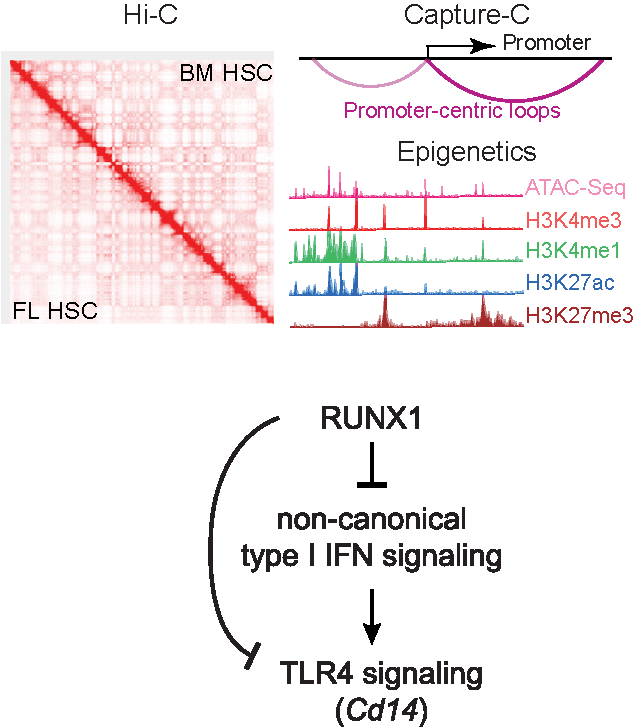
We have made significant contributions to understanding how 3D genome organization regulates cell fate. In Cell Reports (2019), we demonstrated that while global genome structure is conserved between fetal and adult hematopoietic stem cells (HSCs), specific enhancer-promoter reorganizations drive developmental phenotypic differences. Furthermore, in Genes & Development (2023), we found that the transcription factor RUNX1 acts as an epigenetic gatekeeper in granulocyte-monocyte progenitors and neutrophils, restricting inflammatory signaling, which has profound implications for inflammatory disorders in leukemia patients.